Job Indonesia Site

Tampilkan postingan dengan label work. Tampilkan semua postingan

Rabu, 30 Juni 2010

Preparing for the future of work

Abridged: Guardian Careers

NEW YORK, NY -- Over the past 20 years the shape of the workforce has changed beyond recognition. It's obvious that technology is moving as fast as ever -- and the workplace must keep up. A recently produced list of future professions suggests that by 2030 workers might be training for careers as diverse as space pilots, tour guides and educational avatar moderators. Another recent survey suggests that, by 2017, there will also be an 883% rise in employment for other business services -- for instance accountancy, law, consultancy, advertising and public relations.

An example of a thriving, emergent sector is the digital economy, with many more people expected to work in areas such as IT and broadcasting in the coming years. For those already classed as digital workers, changing technology and expectations will mean an increased demand for people to work across a number of platforms.

We're entering a new age of sustainability, meaning we will need to change our entire system of production and consumption, get more efficient with our use of resources and recognize that new sectors are going to emerge as a result. Finally, as the population ages, the number of people employed as care workers will increase. In turn, there will be a rise in informal care, with more employees caring for children or elderly relatives themselves, meaning employers offering flexible working will have the edge over competitors.


Bookmark and Share

Senin, 28 Juni 2010

Have a Great First Day

Only a parent could offer the kind of advice Jessica Donnelly got when she started her first job: "My old-fashioned mother warned me to have my clothes ready and bag packed the night before," says Donnelly, a 2005 Marist College graduate who works for a New York City-based public relations firm. "She also told me to eat a good breakfast and arrive early."
But it turns out Mom's seemingly simplistic advice was more valuable than Donnelly thought. "Those little precautions helped to make a nerve-filled morning run more smoothly," she says.
Your first day of work will help define you in the eyes of your new coworkers. Make a good first impression, and you'll soon be viewed as a capable, respected colleague. But a bad first impression could mean months or years of trying to undo the damage. Here's what you can do -- both before and during your start date -- to be remembered for all the right reasons.
Before Your First Day
  • Relearn How to Sleep: Two weeks before your first day, start establishing the sleep habits you'll follow when your new job begins. If you're usually out well past midnight on weeknights, get home earlier or, even better, stay home more often than not. And if you know your new job will require you to wake up at 6 a.m. to catch a 7 a.m. train, start going to bed at 10 p.m. or 11 p.m.
    "Most new graduates underestimate how exhausting it is to work a full eight hours," says Carol Vellucci, assistant to the president for communications at Towson University.
  • Study the Organization: The more you know about your new company and its activities before you start, the faster you'll get up to speed.
    "I read everything I could on the company to prepare myself for my first day," says Mike Adorno, an Ithaca College graduate who works for Articulate Communications in New York City. That included not only Articulate's Web site but also its clients' Web sites.
On Your First Day
  • Bring a Notebook -- and Use It: You'll be meeting new people and trying to remember their names, learning about office procedures, becoming familiar with the work environment and discovering how your work fits in with that of your department and colleagues. All of this information can be overwhelming.
    "No one can remember it all," says Michael Smith, a professor of mass communications at Campbell University who teaches a course for his department's interns. "So write it down."
  • Listen and Ask Questions More Than You Talk: When you were in job search mode, it probably took awhile to adjust to talking about yourself and your many outstanding skills and achievements. Now it's time to listen and ask questions instead.
    "No one likes a mouthy know-it-all," says Patrick Gray, president of consulting firm Prevoyance Group. "Keeping your ears open can turn into a competitive advantage when you're able to crack the culture of your new home more quickly and become a more productive and insightful employee."
  • Be Ready for Either Indifference or Instant Action: You might be welcomed to the organization with apparent indifference -- no cubicle, no security badge or even no work to do, says Gray. "Keep a smile on your face, and go with the flow for the first couple of days," he says. "Things will usually get sorted out."
    On the other hand, don't be surprised if you're tossed right into the proverbial fire. That's what happened to Cara Chancellor, a 2006 Yale University graduate who works for public relations firm O'Connell and Goldberg. The company immediately called upon Chancellor's fluency in French to pursue a media placement. "Six French phone calls and innumerable French emails later, we secured an interview with Le Monde, the largest and most popular newspaper in France," she says.
    What a way to start the day -- and a new job.


    Bookmark and Share

Kamis, 24 Juni 2010

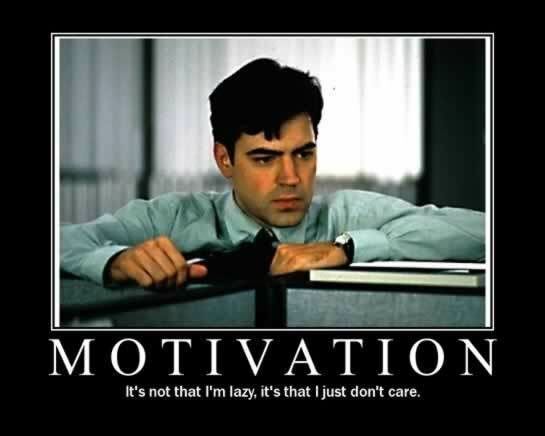
What Motivates You at Work?


Written by Louise Morganti Kaelin

Have you ever thought about what motivates you? What gets—and keeps—you going? When we know WHY we do something, we can use that information to accomplish more. Knowing what motivates us will help us achieve our goals, both personal and professional.

No matter what we do for a living, or where we do it, the things that motivate us to work can probably be found on the following list. Many of us believe that the only reason we work is to earn money. Although there is no question that money, or what it buys (rent, food, etc.), is a prime motivator, money alone does not create the sense of fulfillment and accomplishment that many of us are seeking.

According to LIMRA International, a research association, it's a good idea to prioritize the following motivators for yourself. Once you've identified what works for you, share it with your boss. If you are the boss, ask your employees to prioritize their motivators. Whether you're the boss, the employee, or it's just you (a work-at-home mom or a solopreneur), this is important information for you to know.

INDEPENDENCE

The freedom to run your business activities as you wish; the opportunity to "be your own boss”

  • Do you ever feel restricted?
  • Do you feel overcome by rules and red tape?
  • Do you often feel in disagreement with superiors?

RECOGNITION

The rewards you get for doing a job well, such as being singled out in a publication or speech.

  • How important is winning to you?
  • How do you feel when others receive recognition?
  • Do you go out of your way to win awards?

ACHIEVEMENT

The feeling that you get from successfully accomplishing a job, overcoming obstacles and obtaining goals

  • Is your performance relative to your effort?
  • How do you feel when you have completed a task?
  • What kind of goals do you set for yourself?

LEISURE TIME

The amount of time that you have free to use as you wish, and the degree of enjoyment that you get from this time

  • Do you find yourself neglecting things?
  • Have you postponed a desired activity?
  • Do you really enjoy your leisure me?

POWER

The sense of control that you believe you have over your destiny and the destiny of others; your ability to influence or direct the behavior of others

  • Do you feel that you have control over your destiny?
  • Do people tend to lean on you, ask for your approval?
  • Do you find yourself doing things you'd rather not do?

PRESTIGE

The respect accorded you by your peers and by business or community associates; how others feel you compare with your peers

  • Is prestige important to you?
  • Do others tend to hold you in esteem?
  • Do you find yourself performing to gain esteem?

MONEY

The amount of personal financial income provided by your job

  • Are you proud of what you earn?
  • Do you tend to talk about money or how you spend, save, or invest it?

PRESSURE

The constant feeling or need to show continuing improvement in your job performance

  • Do you feel guilty about not exerting enough effort?
  • Do you continually feel that you must do more?
  • Do you require continual motivation from superiors?

SELF ESTEEM

Your feeling of self-worth; how you feel you measure up to your peers

  • Are you confident that you do as well as you can?
  • Do you feel guilty about poor performance?
  • Are you satisfied with your performance?

FAMILY LIFE

The amount and quality of family activities in which you engage

  • Do you spend enough time with your family?
  • Is the time you do spend meaningful?
  • Do family members talk about the time you spend with them?

SECURITY

The certainty that you feel of maintaining your position; the feeling that tomorrow will be at least as good as today

  • Is job security important to you?
  • Are you afraid to try something new?
  • Do you do things that tend to secure your job?

PERSONAL GROWTH

The feeling of growing as an individual or becoming more competent, more efficient—a better person

  • Do you think that you have grown over the past year?
  • Do you do specific things that result in improvement?
  • Do you have plans for doing more?

Now that you've prioritized this list, you should have a clearer idea of what motivates you at work. It's not just money, is it?

careers, Jobs Indonesia, Indonesia Vacancy


Bookmark and Share


Make Your Experience Work For You

Every job requires people that are trained with unique and individualized skills. Training is a large cost to employers, so capitalizing on your own personal experience on a resume and in an interview will allow interviewers to see your potential as an already experienced and trained employee. The more training you have coming in the job the less cost it will be to the new employer. In addition to the cost saving factor it will also save time as you will not need to be away from your new position to complete training prior to getting started.

Experience vs. education

It seems like experience and education are similar to a teeter-totter, the more education a job candidate has the less experience they have and vice versa. This can be a barrier to some people applying for jobs, whether they have more education or more experience. The positive news is that often employers who require a lot of experience will wave the education components if you have proven yourself as an outstanding employee throughout your experience. In other words a candidate meeting the minimal education requirements, with a good company record and work experience, may have an advantage over a more educated employee with limited work experience.

Again, this consideration depends on the job and the company policy. The more advanced the position being applied for is, the more likely that experience will factor equally with education.

Highlight your experience

People tend to minimize their experiences in job interviews. They may feel that they are being boastful or lack the self-confidence to discuss their strengths and skills. Try to be assertive in talking about your accomplishments and your experience. Use real examples when answering questions. For example, if you were a manager and implemented a new policy or protocol for employees that was beneficial to the company, note that in your interview. Stay results oriented in the interview, as the employer wants to know what you can bring to the table. Stay honest and accurate in your description of your experience both on your resume and during the interview.

A portfolio or folder of awards, certificates, trainings, accomplishments or additional skills that you have obtained can be beneficial in helping the prospective employer survey your experience. It is a nice way to present your experience without having to simply list your skills.

Understand what the employer seeking

Try to do some research on the company that the interview is with. Know what they produce or provide services for and try to determine how your current experience will support or enhance their marketplace. Planning in advance for questions about your experience will help you to be better prepared in the interview and to ensure that you include the full answer.

Focus on the positives

It is important at the interview to stay focussed on the positive aspects of yourself and your experience. Highlight the benefits of the experience that you can bring to the job in positive and concrete terms. Statements that reflect the self-confidence that experience brings will build confidence in the employer. Remember that experience does not mean that you are not open to new ideas and suggestions, rather that you bring a wealth of knowledge to the workplace that a candidate without a hands-on background could.

www.professional-resumes.com

careers, Jobs Indonesia, Indonesia Vacancy


Bookmark and Share


Label

Careers (451) Indonesia Vacancy (451) Jobs Indonesia (451) interview (54) resume (48) job search (25) cover letter (19) Success (17) business (11) job hunting (11) salary (9) job (8) hobby (7) job seeker (6) negotiating (6) teen (6) dream job (5) money (5) online (5) dream career (4) employee (4) finding job (4) internet (4) tips (4) work (4) career (3) career tips (3) job vacancy (3) jobseeker (3) market (3) pilot (3) Confidence (2) Data Entry (2) airline (2) change (2) child (2) experience (2) first job (2) pay (2) planning (2) profesional (2) promotion (2) skills (2) starting job (2) succed (2) succes (2) teacher (2) tricky (2) website (2) woman (2) writer (2) CV (1) HRD (1) IT (1) Job Fairs (1) Job seekers (1) Medical Interviews (1) Portfolio (1) Soichiro Honda (1) active people (1) agriculture (1) analyze (1) application (1) art (1) astronaut (1) attitude (1) bad interview (1) business Articles (1) career fairs (1) contract (1) degree (1) dress (1) economic (1) email (1) employers (1) energy (1) entry level (1) facebook (1) fake (1) fashion (1) film (1) first day (1) freelance (1) fun (1) future (1) geologist (1) green works (1) habits (1) happy (1) hire (1) home (1) hospital (1) ideal career (1) interview disasters (1) j (1) job description (1) jobless (1) jobs (1) kisah (1) kreatif (1) level job (1) life (1) looking (1) manager (1) marketing (1) moms (1) motivation (1) network (1) new career (1) new job (1) next job (1) nurse (1) nurses (1) part-time job (1) pengetahuan (1) personal branding (1) police (1) preparing (1) questions (1) radio (1) reason (1) recession (1) recruitment (1) requirement (1) salesman (1) school (1) secret (1) shopping (1) smart (1) start (1) start career (1) supervisior (1) twitter (1) upgrade (1) workplace (1)

top of blog LOWONGAN AKUNTANSI

TopOfBlogs